
A marvel of the Western Sahara, Mauritania offers hikers and trekkers vast, breathtaking landscapes: the sandstone mountains and plateaus of the Adrar, rocky deserts, and fields of golden or orange dunes dotted with lush oases where an ancestral way of life endures. From this nomadic tradition of great caravans remain these mythical cities, the mere mention of which invites you to set out on a journey: In
Adrar, a region of mountainous landscapes and plateaus, arid canyons, long light-colored dunes, valleys, and oases nourishing date plantations. On the horizon lies Zarga, the “two-colored mountain,” with its black rocks and yellow and red sand. Adrar is ideal for treks and hikes across its two vast dune fields—the Amatlich and Ouarane ergs—and for exploring its illustrious cities—Atar, Chinguetti, and Ouadane.
The Amatlich erg boasts Mauritania’s tallest dune ridges, whose white waves stretch for over 250 km. A must-visit for hikers, it is one of the most beautiful sandy deserts in the Adrar region, dotted with palm groves such as Terjit and Gleitat, and rich in treasures including the rock paintings of Agrour.
The vast Erg Ouarane is a veritable sea of golden sand, its waves undulating endlessly along the hiking trails connecting Ouadane and Chinguetti. It is the iconic desert of the camel caravans.
Atar, the capital of the Adrar region, is where hikers and trekkers meet up with the teams of guides, drivers, camel herders, and cooks who will accompany them through the Mauritanian desert.
Chinguetti, the “library city” surrounded by the golden dunes of the Erg Ouarane. This city of courtyard houses is home to a mosque with a square dry-stone minaret and, most notably, ancient Koranic libraries that have earned it the nickname “Sorbonne of the Desert.”
Ouadane, the caravan city, founded in the 11th century. Built on the side of a cliff, Ouadane boasts a stunning ksar (fortified village), a testament to the legendary trade and cultural routes of the Saharan nomads.
The Banc d’Arguin, an exceptional nature reserve between the Sahara Desert and the Atlantic Ocean. For a unique journey and experience, take the Desert Train from the mining town of Zouerate to the port of Nouadhibou.
General Information
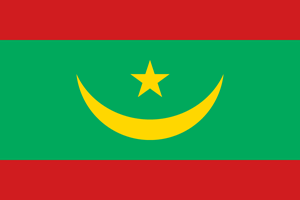
|
Population |
Just under 4 million residents |
|
Area |
1 030 700 km2 |
|
Capital |
Nouakchott (800 000 habitants) |
|
Major Cities |
Nouadhibou, Zouerate, Atar, Kiffa, Kaédi, Rosso. |
|
Highest point |
La montagne Kédia d’Idjil ( |
|
Langue |
Arabic (official language) and Hassaniya, as well as Pular, Soninke, and Wolof (national languages); French is widely spoken. |
|
Religion |
Islam sunnite |
|
Diet |
Democratic Republic |
|
Time difference |
Compared to France, 2 hours behind in summer, 1 hour behind in winter |
|
Currency to Take Home |
Euro in cash |
|
Formalities |
Passport and Visa |
The Climate
A Saharan-type desert climate. The low latitude and moderate elevation (maximum 800 meters) result in a milder winter climate than that of the central Sahara. There are significant temperature variations between day and night. The dry climate makes the temperatures very bearable.
Rainfall, though rare, generally occurs in the summer; however, a sudden shower can never be ruled out. Northeasterly winds are relatively common.
We travel from October through April, the ideal time to explore the Mauritanian desert.
Average temperatures (high/low in °C):
|
Oct |
Nov |
Dec |
Jan |
Feb |
March |
April |
|
33/16 |
28/15 |
23/10 |
22/10 |
25/11 |
29/13 |
33/17 |
Currency: The Mauritanian currency, the ouguiya, is not convertible; a credit card will not be of much use to you (you can use it to withdraw money from an ATM, but never to make purchases), we recommend bringing 5-, 10-, 20-, and 50-euro bills, which you can exchange as needed; the rate is 40 MRU to 1 euro as of June 15, 2022.
Currency exchange is available upon arrival at the airport. You can also pay in euros everywhere.
A Few Useful Words
The language spoken by the Moors is Hassaniya, a dialect of Arabic closely related to literary Arabic. Learning a few key words will help you earn the respect of those you speak with and make your interactions with the Mauritanians you meet easier and more enjoyable. So, don’t hesitate to use the following expressions:
Hello: as-salam’aleikoum – Response: Wa’aleikoum as-salam
Please: min fadlak
How are you?: Echtari
Thank you: choukrane
Goodbye: maa slama
Yes: na’am – No: là
God willing: inch’Allah
You can ask your guide how to pronounce them… Your trip will be all the richer for it! And besides… a smile is often the best way to make good connections
To travel to Mauritania, book your flight as soon as possible with
www.royalairmaroc.com
www.airfrance.fr
www.tunisair.com
www.bintercanarias.com
If you'd like a trip that includes a ticket, please contact SALIMAVOYAGES